Is It Better to Repair or Replace Your Lawn in Adelaide?
- Anthony Van Seumeren
- Aug 30
- 9 min read

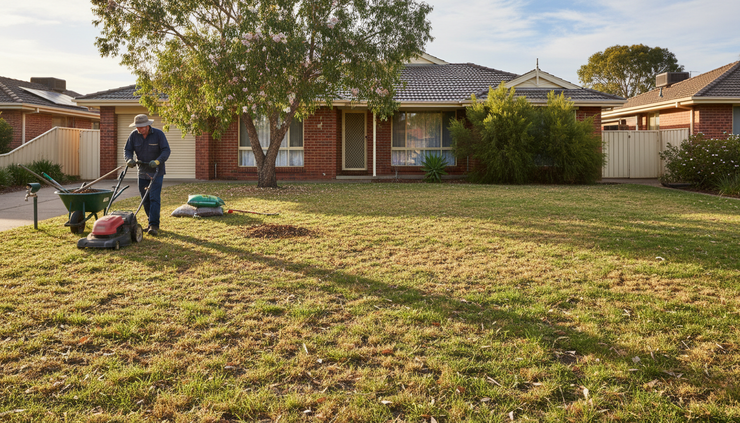
A lawn starts looking thin, brown, patchy, weedy or just tired. After a few weekends of watering, fertilising, mowing and hoping for the best, the thought creeps in: would it be easier to rip the whole thing up and start again?
Sometimes the answer is no. Some very poor-looking lawns can recover surprisingly well once the real problem is fixed. A Couch lawn that looks almost dead after a long Adelaide summer may still have healthy runners. A Buffalo lawn thinned by shade may improve with better mowing and selective repair. Kikuyu that has gone patchy from heat stress can often bounce back when water, soil and traffic issues are corrected.
At other times, patching and feeding become an expensive cycle because the lawn is fighting a problem that has never been properly identified. Poor irrigation coverage, compacted soil, drainage trouble, heavy shade, pet damage or the wrong grass type for the site can keep dragging the lawn backwards.
The key principle is simple.
Diagnose first. Treat second. Don’t replace a lawn that can be repaired, but don’t keep spending money treating a lawn when the underlying problem is still there.
That is especially true in Adelaide, where hot, dry summers, cooler wet winters, varied soil types and very different backyard conditions can all affect how a lawn performs.

Appearance alone does not tell the whole story
A brown lawn can look worse than it really is. Warm-season grasses such as Couch, Kikuyu and Buffalo can lose colour under stress and still recover when growing conditions improve.
In Adelaide, lawns often struggle most through summer and early autumn. Long dry spells, hot northerly winds and high soil temperatures can push grass into survival mode. Even a lawn with decent care can look tired by March if irrigation is patchy or the soil dries out too quickly.
Winter brings a different set of conditions. Cooler weather and more rainfall can help some lawns recover, but warm-season grasses slow down. Couch and Kikuyu may lose colour or sit almost still through the colder months. Buffalo can also slow, especially in shaded or damp areas. A lawn that looks sleepy in winter is not always failing.
That is why timing matters. Judging a warm-season lawn in the middle of winter, or straight after a heatwave, can lead to the wrong decision. It is better to look for signs of life, growth habit and the cause of decline before deciding whether replacement makes sense.
Good signs that repair may be realistic include:
Green shoots or runners returning after watering
Healthy grass still present across much of the area
Bare patches caused by clear local issues, such as pets or foot traffic
Weeds that have moved in because the lawn thinned, rather than because the site cannot grow grass
Damage linked to one season, one watering issue or one maintenance mistake
More concerning signs include:
Large areas where grass has completely disappeared
No active runners or crowns left in the lawn
Repeated failure after several repair attempts
Severe compaction, drainage or shade that has not been fixed
A grass type that clearly does not suit the site
The aim is not to save every lawn at all costs. It is to work out whether the lawn has a fair chance of recovery.
Common Adelaide lawn problems that can be repaired
Many struggling lawns do not need full replacement. They need targeted repair and better conditions.
Heat and moisture stress
Adelaide summers are tough on lawns. A lawn can be watered regularly and still suffer if the water does not reach the root zone evenly. Sprinklers may miss corners, overspray paths or deliver far more water to one area than another.
Clues include dry patches that return in the same places, wilted leaf blades, footprints that remain visible and soil that repels water. Sandy soils in some suburbs may dry quickly. Heavier clay soils in other areas may hold moisture but become hard and compacted.
Repair may involve improving irrigation coverage, using wetting agents where suitable, adjusting watering depth and encouraging deeper roots through correct mowing and feeding.
Soil compaction
Compacted soil is common where children play, pets run, bins are dragged, cars edge onto lawns or outdoor furniture sits for long periods. The grass may thin even when watered and fertilised because air, water and roots cannot move properly through the soil.
Core aeration can make a big difference. It opens the soil and helps water and nutrients reach the root zone. If compaction is the main issue, replacing the lawn without fixing the soil can lead to the same problem returning.
Weeds taking over thin turf
Weeds are often a symptom, not the original problem. When grass thins from drought stress, poor mowing, compaction or weak soil, weeds find space.
If enough desirable lawn remains, repair may include weed control, feeding, topdressing and encouraging the grass to thicken. Couch and Kikuyu can spread strongly when conditions improve. Buffalo can fill in too, although it is slower and relies more on surface runners.
The best long-term weed control is a dense, healthy lawn that leaves little room for weeds to establish.
Mowing too short or too irregularly
Mowing habits can quietly weaken a lawn. Cutting too low removes too much leaf, stresses the plant and exposes soil to heat. This is a common issue in Adelaide during summer, when short lawns can dry out faster.
Buffalo generally prefers a higher cut than Couch. Kikuyu tolerates regular mowing well but can become thatchy or scalped if mowing height and frequency are wrong. Couch can handle a lower cut when actively growing, but it still needs the right care to stay dense.
A lawn damaged by mowing often looks patchy rather than completely dead. Adjusting mowing height, avoiding scalping and mowing more regularly during active growth can support recovery.

When lawn repair is usually the better choice
Repair is often worth considering when the lawn still has a living base and the cause of damage can be corrected.
A lawn may be a good repair candidate if more than half of the area still has desirable grass, even if it is thin. This is especially true for Couch and Kikuyu, which can spread into bare areas during the warmer growing season. Buffalo can also recover well if runners are still healthy, though larger bare patches may need plugs, turf pieces or more patience.
Repair also makes sense when the problem is localised. For example, a narrow worn track from the clothesline to the back door does not mean the whole lawn has failed. A pet urine patch, a dry sprinkler zone or a shaded strip along a fence can often be addressed without replacing everything.
In many Adelaide yards, repair may include a mix of:
Irrigation testing and adjustment
Aeration to relieve compaction
Soil improvement or topdressing
Weed control suited to the grass type
Fertilising during the active growing season
Reseeding, plugging or returfing small areas where suitable
Mowing changes to reduce stress
Managing pet traffic or play zones
Season also affects the repair plan. Warm-season lawns repair best when they are actively growing, usually from spring through early autumn, depending on conditions. Trying to force major recovery in mid-winter can disappoint because the grass is naturally slow.
Repair is not always instant. It can take a few weeks to see early improvement and longer for full thickening. The benefit is that repair keeps existing turf where it is viable, avoids unnecessary removal and often costs less than replacement.
When replacement or major renovation may be the smarter option
Replacement becomes more sensible when the existing lawn has little healthy grass left, the surface is uneven or contaminated, or the grass type is wrong for the conditions.
For example, a heavily shaded courtyard may never support a sun-loving Couch lawn well. A lawn exposed to constant dog traffic may need a tougher layout, not just more fertiliser. A low section that stays wet through winter may need drainage work before any new turf goes down.
Replacement may also be worth considering if the lawn has become a patchwork of different grasses and weeds with very little desirable turf remaining. In that case, repair can become slow, uneven and frustrating.
Major renovation sits between simple repair and full replacement. It may involve scalping, dethatching, aeration, topdressing, levelling and encouraging regrowth from existing runners. Couch and Kikuyu often respond well to renovation during the right season. Buffalo needs a gentler approach because aggressive scalping can damage it.
Full replacement may involve removing the old lawn, improving the soil, fixing levels and drainage, then laying new turf that suits the property. The soil preparation matters as much as the turf choice. New grass laid over compacted, poorly drained or uneven ground may look good for a short time, then decline.
That is why replacement should not be treated as a magic reset. It is only a reset if the cause of the old lawn’s decline is fixed first.

The right decision depends on the property
Two Adelaide lawns can look similar from the street but need completely different solutions.
A lawn in a sandy coastal suburb may dry out quickly and need better moisture management. A lawn on heavier clay may struggle with compaction, puddling or hard summer surfaces. Established suburbs with large trees may have root competition and shade. Newer homes may have compacted builder’s soil under a thin layer of topsoil.
Even within one property, conditions can change from one section to another. The front lawn may bake in full sun. The side passage may stay shaded and damp. The backyard may handle children, pets and entertaining. A single treatment plan may not suit every zone.
Grass type matters too.
Grass type | Common strengths | Common Adelaide challenges |
Couch | Handles sun and can spread strongly | Struggles in shade and may brown off in cooler months |
Kikuyu | Tough, fast-growing and good for active areas | Can become invasive and needs regular mowing |
Buffalo | Softer leaf and better shade tolerance than Couch | Slower to repair large bare areas and dislikes scalping |
None of these grasses is “best” for every Adelaide home. The right choice depends on sun, soil, use, water, maintenance expectations and budget.
This is where a proper lawn assessment earns its keep. It looks at the site, not just the symptoms.
A useful diagnosis should consider:
How much direct sun the lawn receives
Whether irrigation reaches all areas evenly
How quickly the soil dries or drains
Whether the ground is compacted
What grass species are actually present
Whether pests, disease or weeds are involved
How the lawn is mowed and used
Whether pets or foot traffic are causing repeat damage
Once those factors are clear, the repair-or-replace decision becomes much easier.
A simple decision guide for homeowners
Before spending money on new turf, work through these questions.
Is the lawn actually dead or just dormant?
Warm-season grasses can look poor when stressed or dormant. Look closely at the base of the plant and runners. If there is green tissue, active shoots or firm runners, repair may be possible.
Is the damage spread across the whole lawn or only in certain areas?
Localised damage often points to a local cause. Think irrigation gaps, shade, pets, compaction or foot traffic. Whole-lawn decline may suggest broader soil, watering, mowing or grass health issues.
Has the same treatment failed more than once?
If fertiliser, watering or weed spraying has not worked, stop repeating the same approach. The missing step is diagnosis.
Would new turf face the same conditions?
If the answer is yes, replacement alone may waste money. Fix soil, drainage, irrigation, shade or traffic problems first.
Is the grass type suited to the area?
A shade-stressed Couch lawn may never perform well under dense tree cover. A delicate lawn surface may not suit heavy play or pets. Matching grass to site conditions is central to long-term success.

How The Lawnscaping Edge approaches the decision
For The Lawnscaping Edge, the starting point is not “replace it”. It is diagnosis.
A professional lawn assessment looks for the reason the lawn is struggling. Sometimes the answer is a straightforward repair plan. That might mean aeration, irrigation adjustment, seasonal fertilising, weed control, topdressing or patch repairs. In those cases, keeping the existing lawn is often the most sensible path.
In other situations, the lawn may need heavier renovation or replacement. That recommendation should come with a clear reason. For example, the lawn may have too little desirable grass left, severe surface problems, persistent drainage issues or a grass type that does not match the site.
The best result is not always the newest lawn. It is the lawn that suits the property and can be maintained realistically through Adelaide’s seasons.
A practical plan should answer three questions:
What caused the decline?
Can the existing lawn recover if that cause is fixed?
If replacement is needed, what must change so the new lawn succeeds?
That approach protects time, money and effort.
The takeaway for Adelaide lawns
A tired lawn is not a verdict. It is a clue.
Many Adelaide lawns can be repaired, especially when there is living grass, a clear cause and the right season for recovery. Others need renovation or replacement because the underlying issue is too severe, the grass is wrong for the site or too little healthy turf remains.
The mistake is making the decision based on appearance alone. A brown, thin or weedy lawn may still have a strong recovery path. A newly laid lawn may fail if compaction, drainage, irrigation or shade problems remain untouched.
So before ripping up the lawn, start with the professional rule: diagnose first, treat second. Repair what can be repaired. Replace only when there is a sound reason. And if a new lawn is the right answer, make sure the ground, grass type and maintenance plan give it the best chance to thrive in Adelaide conditions.


Comments